

Toyota RAV4 vs RAV4 Hybrid: Which Model Is Right for You?
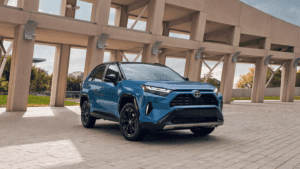
When it comes to choosing between the 2025 Toyota RAV4 and the 2025 Toyota RAV4 Hybrid, it’s not just about fuel economy—it’s about finding the perfect blend of performance, technology, and daily usability. Whether you’re searching for the best Toyota SUV for long commutes in 2025, a family-friendly ride, or an efficient crossover for city driving, Toyota of Whittier is here to help you compare these two popular models in detail.
Let’s break down the Toyota RAV4 vs RAV4 Hybrid 2025 comparison to help you decide which model suits your lifestyle best.
1. Powertrain and Performance: Gas vs Hybrid
The standard 2025 Toyota RAV4 comes with a 2.5L 4-cylinder engine delivering 203 horsepower and smooth shifting via an 8-speed automatic transmission. It’s a capable SUV with strong acceleration and a refined ride.
On the other hand, the 2025 Toyota RAV4 Hybrid pairs a 2.5L gasoline engine with two electric motors, generating a combined 219 horsepower. What’s more impressive is how RAV4 Hybrid performance compares to the standard RAV4—you get faster acceleration off the line thanks to instant torque, making it ideal for city driving and merging onto highways.
2. Fuel Efficiency: Hybrid Advantage
When it comes to the fuel efficiency of the 2025 Toyota RAV4 Hybrid, the numbers speak volumes. The hybrid achieves up to 41 mpg city / 38 mpg highway, compared to the gas model’s 27 mpg city / 35 mpg highway. If you’re commuting around Whittier or navigating LA traffic, the RAV4 Hybrid is the fuel-saving choice.
So if you’re weighing RAV4 Hybrid vs RAV4 for daily driving, the hybrid wins for long-haul commuters and eco-conscious drivers alike.
3. AWD Capabilities and Off-Road Features
Both models offer All-Wheel Drive (AWD), but with some differences:
- The RAV4 gas model can be equipped with Dynamic Torque Vectoring AWD, especially on Adventure and TRD Off-Road trims, offering enhanced off-road capabilities.
- The 2025 RAV4 Hybrid AWD uses an Electronic On-Demand AWD system, which is responsive and reliable for slippery conditions, though less rugged.
Looking for outdoor adventures? The gas-powered RAV4 Trail and TRD Off-Road trims provide specialized suspension, skid plates, and Multi-Terrain Select modes.
4. Towing Capacity: Who Pulls Ahead?
Here’s a surprising twist: when comparing the Toyota RAV4 Hybrid vs gas towing capacity, the gas model slightly edges ahead.
- RAV4 gas: Up to 3,500 lbs (when properly equipped)
- RAV4 Hybrid: Up to 1,750 lbs
If towing is a priority—think small boats, trailers, or campers—the gas model is better suited. But for light-duty hauling and road trips, the hybrid still performs reliably.
5. Technology and Infotainment
Both models are loaded with tech, including:
- Standard Apple CarPlay® and Android Auto™
- 8- or 10.5-inch touchscreen displays
- Toyota Audio Multimedia system
- Available wireless charging and Wi-Fi Connect
Whether you go gas or hybrid, you’ll enjoy seamless connectivity on the road. The hybrid’s quiet cabin makes hands-free calls and voice commands even more enjoyable.

6. Interior Comfort and Cargo Space
No compromises here. Both RAV4 models offer:
- Seating for five
- Up to 69.8 cubic feet of cargo space with the rear seats folded
- Dual-zone climate control
- Available SofTex®-trimmed seats and panoramic moonroof
For families in the LA area, choosing between the Toyota RAV4 for families vs hybrid for fuel savings comes down to daily usage. You won’t sacrifice comfort with either option.
7. Maintenance Costs and Reliability
Let’s talk long-term ownership. Toyota RAV4 Hybrid vs gas model maintenance cost tends to favor the hybrid. Why?
- Regenerative braking leads to less brake wear
- Fewer oil changes required
- Toyota’s hybrid components are covered under an extended 8-year/100,000-mile warranty
In terms of reliability, both models are highly rated, but many drivers ask: Which RAV4 is more reliable—hybrid or gas? Data shows Toyota hybrids have a long-standing reputation for durability and low-cost ownership.
8. Resale Value and Depreciation
Looking ahead, the Toyota RAV4 Hybrid resale value vs gas model leans toward the hybrid. Due to increasing demand for fuel-efficient SUVs, hybrid models typically hold their value better in the used market—especially in California, where hybrid incentives and fuel prices make them highly desirable.
9. Pros and Cons of the 2025 RAV4 Hybrid
Pros:
- Superior fuel economy
- Smoother city driving
- Lower long-term maintenance costs
- Eligible for tax incentives and HOV lane access in some areas
Cons:
- Higher MSRP than the base gas model
- Slightly reduced towing capacity
- AWD is not as rugged for trail use
When evaluating RAV4 Hybrid pros and cons for 2025, the benefits are clear for most daily drivers.
10. Pricing, Lease Offers & Local Availability
The starting MSRP for the 2025 RAV4 Hybrid is higher than the gas model, but lease incentives help close the gap. You can often find Toyota RAV4 Hybrid lease deals near me in 2025 right here at Toyota of Whittier, along with special offers on service and certified used models.
Our inventory is updated daily, and we support your hybrid ownership with ToyotaCare, EV charger installation guidance, and more.

Final Thoughts: Which Is Better—RAV4 Gas or Hybrid?
Still wondering which is better, RAV4 gas or hybrid? Here’s a quick breakdown:
| Feature | 2025 RAV4 Gas | 2025 RAV4 Hybrid |
| Horsepower | 203 hp | 219 hp |
| Fuel Economy (City) | 27 mpg | 41 mpg |
| AWD Availability | Yes | Yes |
| Towing Capacity | 3,500 lbs | 1,750 lbs |
| Starting MSRP | Lower | Higher |
| Best For | Trail use, towing | City commutes, fuel savings |
Whether you’re looking for the most fuel-efficient Toyota SUV or something with rugged off-road capabilities, Toyota of Whittier has you covered. Visit us today to test drive both models and discover why we’re the best Toyota dealership near Los Angeles for hybrid SUVs and family crossovers.
*Penned by AI, polished by humans
0 comment(s) so far on Toyota RAV4 vs RAV4 Hybrid: Which Model Is Right for You?