

Toyota Tundra Gas vs Hybrid: Which Powertrain Is Right for You in 2025?
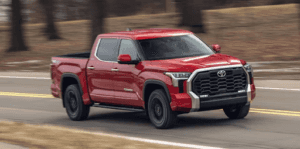
Toyota Tundra Gas vs Hybrid: Which Powertrain Is Right for You in 2025?
When shopping for a full-size truck that’s ready to handle life in Whittier, one of the most common questions we hear is: Should I choose the gas engine or the hybrid? Understanding the differences in performance, efficiency, pros and cons, and long-term value is essential. At Toyota of Whittier, our team is here to help you explore both Tundra options and find the perfect fit for your lifestyle.
In this blog, we’ll break down the Toyota Tundra gas vs hybrid comparison using real-world data, performance metrics, and ownership insights—so you can confidently decide which model is right for your needs.
1. Toyota Tundra Powertrain Options Explained
For 2025, the Toyota Tundra offers two engine configurations:
- Gas Engine (i-FORCE 3.4L Twin-Turbo V6)
Produces 389 horsepower and 479 lb-ft of torque. This is the standard engine for most Tundra trims. - Hybrid Engine (i-FORCE MAX Twin-Turbo V6 + Motor Generator)
Combines the same 3.4L engine with an electric motor, boosting output to 437 horsepower and 583 lb-ft of torque.
The hybrid version is not a plug-in—it uses regenerative braking and engine power to charge its internal battery.
2. Toyota Tundra MPG: Gas vs Hybrid
Fuel economy is a major concern for truck buyers, especially with fluctuating gas prices. The 2025 Toyota Tundra hybrid fuel economy outperforms its gas counterpart:
- Gas Tundra MPG:
Around 18 city / 23 highway / 20 combined (RWD) - Hybrid Tundra MPG:
Up to 20 city / 24 highway / 22 combined (RWD)
The numbers might not look massive at first glance, but they add up significantly over time—especially if you’re towing or commuting daily.
3. Towing Capacity: Toyota Tundra Hybrid vs Gas
When it comes to muscle, both versions offer excellent towing performance, but the gas version has a slight edge:
- Toyota Tundra gas towing capacity: Up to 12,000 pounds
- Toyota Tundra hybrid towing capacity: Up to 11,450 pounds
So if max towing is your top priority, the gas engine is still the best Toyota Tundra engine for towing. That said, the hybrid’s instant torque from the electric motor makes hauling smoother and more responsive in real-world driving.
4. Toyota Tundra Hybrid vs Gas Performance Review
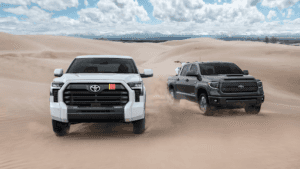
In real driving conditions, the Toyota Tundra i-FORCE MAX vs gas engine difference is noticeable:
- Hybrid: Better throttle response, smoother power delivery, and less turbo lag thanks to the electric motor assist.
- Gas: Traditional feel, slightly louder exhaust note, and more “truck-like” personality.
Both powertrains are paired with a 10-speed automatic transmission, offering refined shifting and impressive towing tech.
5. Long-Term Ownership: Maintenance & Cost
Let’s talk about money. Is the Toyota Tundra hybrid worth it?
- Toyota Tundra hybrid maintenance vs gas:
The hybrid has fewer moving parts (no alternator or starter motor), and regenerative braking reduces wear on brake pads. Toyota’s hybrid tech is proven to last, and battery issues are rare. - Long-term cost comparison:
The hybrid costs more up front, but lower fuel and maintenance costs can offset that over 5–7 years, depending on how much you drive.
For work trucks or high-mileage users, the hybrid may save more in the long run. Plus, you’ll often find Toyota Tundra hybrid incentives available at Toyota of Whittier throughout the year.
6. Reliability: Toyota Tundra Hybrid vs Gas
Reliability is one of Toyota’s calling cards—and both powertrains uphold that reputation.
- Toyota Tundra hybrid reliability compared to gas:
Early data and owner feedback show both configurations performing well, though hybrid components haven’t been around as long in the Tundra specifically. However, Toyota’s hybrid tech has been tested for decades in other models with excellent reliability.
And rest assured, both versions come with Toyota’s factory warranties and access to extended service plans at Toyota of Whittier.
7. Interior & Tech: No Compromises
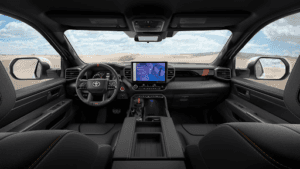
Regardless of the engine, the 2025 Tundra delivers on modern tech and comfort. You’ll find:
- Standard Apple CarPlay and Android Auto integration
- Available 14-inch touchscreen
- Toyota Safety Sense 2.5
- Available ventilated seats, panoramic roof, and premium JBL audio
Toyota doesn’t skimp on features between hybrid and gas trims—you get the same connectivity and luxury options across the board.
8. Toyota Tundra Hybrid Pros and Cons
Here’s a quick breakdown for easy decision-making:
Hybrid Pros:
- Higher horsepower and torque
- Better MPG
- Smoother power delivery
- Regenerative braking reduces wear
Hybrid Cons:
- Higher upfront cost
- Slightly lower towing capacity
Gas Pros:
- More affordable
- Slightly better max towing
- Simpler powertrain (fewer hybrid components)
Gas Cons:
- Lower MPG
- Louder cabin during acceleration
9. Which Toyota Tundra Engine Is Better?
It depends on your priorities:
- Go hybrid if you want improved fuel economy, daily comfort, and tech-forward performance.
- Go gas if your budget is tight or you need every ounce of towing capacity.
For many buyers, the hybrid offers the best blend of power, efficiency, and long-term value—especially if you plan to keep your truck for 7+ years.
10. Visit Toyota of Whittier to Test Drive Both Options
Still deciding between the 2025 Toyota Tundra gas vs hybrid? Toyota of Whittier has both in stock and ready to test drive. Whether you’re upgrading your work truck or just want more power for weekend adventures, our team can walk you through every feature—from towing packages to infotainment systems.
Ask us about current hybrid incentives, lease offers, and extended service plans for added peace of mind.
*Penned by AI, polished by humans
0 comment(s) so far on Toyota Tundra Gas vs Hybrid: Which Powertrain Is Right for You in 2025?